Soil vs Coco vs Hydro: Choosing Your Growing Medium (Biobizz Soil, Canna Soil & Coco Compared)
Soil is the most forgiving growing medium and the best start for most UK home growers. Coco grows faster but is inert and needs Cal-Mag; hydro is fastest and least forgiving. Here is how they compare, and how to pick between Biobizz and Canna soils.


On this page
Soil is the most forgiving medium and the best choice for beginners — it buffers feeding and watering mistakes, and pre-fertilised Biobizz soil or Canna soil can carry young plants for weeks. Coco coir grows faster but is inert, dries out quicker and needs Cal-Mag plus more frequent feeding. Hydroponics gives the fastest growth and highest yields but is the least forgiving of any mistake.
Who this guide is for: UK home growers choosing a medium, or weighing a move from soil to coco or hydro.
That is the short version. Biobizz soil is a range of organic, pre-fertilised potting mixes (Light-Mix and All-Mix); Canna soil — sold as Canna Terra — is a peat-and-perlite potting range. Below we compare the three media and cover what trips up most coco beginners: buffering and the Cal-Mag link. It is written for UK home growers, with UK water, UK delivery and the advice we give in store.
Soil vs coco vs hydro: what is the difference?
This is the table to bookmark. "Forgiveness" is how much room a medium gives you to make a mistake and still recover.
| Medium | Difficulty | Watering frequency | Feeding | Forgiveness | Best for |
|---|---|---|---|---|---|
| Soil | Easiest | Every 2–3 days, thoroughly to light run-off | Light — pre-fertilised mixes feed for weeks before liquids are needed | Highest — organic matter buffers pH and nutrient swings | Beginners, hands-off growers, anyone on a busy schedule |
| Coco coir | Moderate | Daily, sometimes twice daily in late flower | Full feed from day one — inert, needs Cal-Mag and coco-specific nutrients | Medium — hard to overwater, but no nutrient buffer | Growers wanting faster growth who can feed/check daily |
| Hydroponics | Hardest | Constant/recirculating — roots sit in or are fed solution | Full mineral feed, tightly pH/EC managed | Lowest — problems escalate within hours | Experienced growers chasing maximum speed and yield |
Target pH is 6.0–6.8 in soil and 5.5–6.2 in coco and hydro, where most growers hold 5.8–6.0. Our pH, EC and water quality guide covers meters and calibration.
One caveat comparisons often skip: soil being "slow" is a feature for beginners, not a flaw, because slow nutrient release forgives a missed feed.
Light Mix vs All Mix: which soil should you choose?
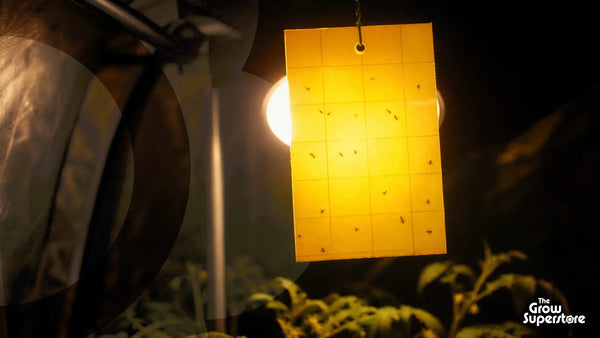
Soil is the classic UK starting point. The two big brands we sell from our Peterborough store are Biobizz and Canna: organic matter and a starter charge of nutrients feed the plant for weeks and cushion errors. Light-Mix or All-Mix is the choice most new growers get stuck on, and Canna Terra is the equivalent range. Wet soil attracts gnats: see fungus gnats.
| Soil | Starter charge | When liquid feed starts | Best for |
|---|---|---|---|
| Biobizz Light-Mix 50L | Light, well-draining, medium EC | Within a week or two | Control, seedlings, automatic irrigation, growers who tend to over-feed |
| Biobizz All-Mix 50L | Rich, "outdoor-style" | After several weeks | A lower-effort start for vigorous plants — too heavy for young seedlings |
| Canna Terra Professional 50L | Light, high-nitrogen peat-and-perlite | Early, as with Light-Mix | Control and seedlings; closest to Light-Mix |
| Canna Terra Professional Plus 50L | Fuller, pH-adjusted with a full-cycle lime charge | Later, as with All-Mix | A richer, lower-effort start |
Light-Mix needs liquid feed sooner, which gives precise control. All-Mix means less day-one effort, but its heavier charge is easy to over-do with seedlings, so many growers start in Light-Mix and step up later. For seedlings and clones, see our propagation masterclass.
Light-Mix or Canna Terra Professional for control and seedlings; All-Mix or Terra Professional Plus for a richer, lower-effort start. To compare Biobizz, Canna, Dutch Pro, Plagron and Gold Label feed ranges, read the nutrient-line guide; organic vs mineral nutrients explains the soil-versus-coco feeding split.
How do you use coco coir, and why does it change how you feed?
Coco coir for plants is the fibrous husk of the coconut, sold as bags, bricks or loose mixes and used as a soilless growing medium. It holds water, drains freely and contains almost no nutrients, so you supply the whole feed. Growers often search for "canna coco soil", though it contains no soil: the Canna version is Canna Coco Professional Plus 50L, a pre-buffered, RHP-certified coco.
Coco waters like soil but behaves like hydroponics, the thing to understand before you switch. In the Coco collection you will see "buffered" and "RHP-certified" on the good bags.
Coco is inert. It holds almost no nutrients of its own, so unlike soil there is no buffer to forgive a skipped feed — you provide a complete, balanced feed from day one.
Coco has a high cation exchange capacity (CEC). Its binding sites arrive loaded with potassium and sodium. When your nutrient solution hits fresh coco, those sites swap: they grab calcium and magnesium from your feed and release potassium back. Coco strips Ca and Mg until the sites are saturated, which shows up as a calcium/magnesium deficiency on new growth.
This is what "buffering" fixes. Buffering means soaking the coco in a calcium-magnesium solution before use, so Ca/Mg lock onto the freed-up sites and stay put. Quality coco like Canna Coco or Gold Label arrives pre-buffered and RHP-certified, which saves you the job. But even then you should still add Cal-Mag to your irrigation water throughout the grow, especially in the UK if you use RO or soft water that carries little dissolved calcium to begin with. We cover dosing, meters and water source in our pH, EC and water quality guide.
Watering frequency is higher. Coco holds a high water-to-air ratio yet drains and dries faster than soil, so you cannot let it dry out the way you can a soil pot. Expect to water daily, and up to twice a day in peak flower, in small amounts until a little runs off. That is why coco can outpace soil, but it asks for daily attention. A single-bottle nutrient for coco and hydro can simplify the feed. Solid UK options we'd point a grower to include Canna Coco Professional Plus and Gold Label 60/40 Coco/Clay Pebbles, or the hybrid Canna Coco 60-40 Pebble mix. For drainage, see pots and fabric containers.
What is hydroponics?
Hydroponics is growing plants in a nutrient solution instead of soil, with roots either sitting in the solution or supported by an inert medium such as rockwool, perlite or clay pebbles. Common systems include DWC (deep water culture), NFT (nutrient film technique), drip and aeroponics. Done well, it gives the fastest growth and highest yields because the plant gets oxygen and a tuned feed on demand.
The trade-off is forgiveness: with no soil buffer, a pH swing, pump failure or EC mistake can stress plants within hours. It needs more kit and daily monitoring. We will cover choosing and running a system in hydroponic systems compared; this post is about choosing your medium, so we keep hydro at headline level. New to the idea? Start with what hydroponics is and how to get started.
Is coco better than soil, and which should a beginner choose?
Honest answer: coco is not simply "better". It grows faster, but soil is more forgiving, so for most first-time UK growers soil wins. Start in soil.
- Choose soil if this is your first grow, your schedule is unpredictable, or you want the medium to forgive the odd missed watering or feed. Biobizz Light-Mix or Canna Terra Professional are the easiest starting points; All-Mix if you want a richer, lower-effort base. This is the right answer for the large majority of UK home growers.
- Choose coco for your second grow, or your first if you can commit to checking and watering daily and you are happy to learn pH/EC (a pH and EC tester is the first buy) and add Cal-Mag. The reward is faster growth; pre-buffered, RHP-certified coco makes the learning curve gentler.
- Choose hydro once you are comfortable managing pH and EC and want to push for maximum speed and yield, accepting that it is the least forgiving of mistakes.
Autoflowers and first-grow yield. Autoflowers flower by age rather than light cycle, so a slow start cannot be made up later. That suits coco and hydro, though Light-Mix is still a safe first run. On a first grow, technique matters more than medium: a steady soil run usually beats a coco or hydro run with swinging pH and EC.
Autumn and winter. Cold water and a cold root zone slow uptake in any medium. Soil dries more slowly, so water less often; coco still needs regular small feeds. In hydro, keep the solution at or above 18 °C (64 °F); see reservoir management and our winter grow room tips.
There is no single "best" medium, only the best match for your experience and daily attention. If unsure, go soil first, then coco, then hydro. Next, plan a feeding schedule, learn to flush a locked-out medium and look after roots with mycorrhizae and beneficial microbes.
Frequently asked questions
Is soil better than coco? For beginners, usually yes. Soil's organic matter buffers pH, nutrient and watering mistakes, and pre-fertilised mixes feed young plants for weeks. Coco grows faster but is inert, needs Cal-Mag and a full feed from day one, and demands daily watering. Which is better depends on how much daily attention you can give.
Does coco give a bigger yield than soil? It can, once you can hold pH, EC and watering steady. Coco's fast wet-dry cycle and constant feed speed growth, but it offers no buffer for mistakes, so a well-managed first soil run usually beats a poorly managed coco run.
Is coco considered hydro? Yes — coco coir is a soilless substrate and is classed as a form of hydroponic growing. It is inert and you supply all the nutrients, like hydro, but it is hand- or drip-watered in pots rather than sitting in a recirculating reservoir, so it feels more like soil.
Do I need Cal-Mag in pre-buffered coco? Yes. Pre-buffering stops the coco stripping your first feeds, but the plant still needs ongoing calcium and magnesium, particularly with UK RO or soft water. Add Cal-Mag to your irrigation water throughout the grow.
Is Biobizz Light-Mix or All-Mix better for beginners? For most beginners, Light-Mix is the safer pick: it holds only a light starter charge, giving you more feeding control and far less risk of burning tender seedlings. Choose All-Mix for a richer, lower-effort start that feeds vigorous plants for weeks, but keep it away from young seedlings.
Where to start
Browse the Growing Media collection or Gold Label growing media.
Related reading: what to buy for your first setup · grow room setup checklist.
Why trust The Grow Superstore
The Grow Superstore has been helping UK growers since 2009, from our shop at 6 Wulfric Square, Bretton, Peterborough PE3 8RF. We stock and use these media every day, so the advice above comes from real shop-floor experience, not just spec sheets. Pop in for a free in-store consultation, or message the team and we will help you pick the right medium for your space, your water and your experience level. Free delivery over a set order value on UK Mainland orders (exclusions apply).

New guides every week
Media & Systems
Soil, coco, hydro systems and propagation — choosing and running your setup
Browse all Media & Systems guides